

Homeowners researching garage floor coatings often ask a fair question: what’s the difference between epoxy and polyurea-polyaspartic flooring? The confusion usually comes from the way these products are marketed as stand-alone solutions. In reality, epoxy and polyurea-polyaspartic coatings are not competing options. They are complementary materials used together in a professionally installed garage floor coating system.
Understanding how each product functions helps explain why long-lasting floors rely on multiple layers rather than a single coating.
Epoxy Flooring Builds the Foundation Beneath the Surface
Epoxy is widely used in professional systems because of how effectively it bonds to concrete. An epoxy floor coating (specifically, a moisture-mitigating epoxy) can be applied thickly to concrete; it slowly penetrates the concrete substrate, making it an ideal primer and base coat. This layer is critical for managing moisture-realted conditions and supporting long-term adhesion.
Concrete always contains moisture, even when it appears dry. Without proper moisture mitigation, coatings applied to the surface are more likely to blister or delaminate over time. Moisture-mitigating epoxy primers are specifically designed to address this issue. They cure slowly and deeply penetrate the concrete slab, thus creating a strong bond for the layers above. (The entire coating system is only as strong as it’s primer coat).
Epoxy flooring is also commonly used in interior spaces, where UV exposure is limited. While epoxy is highly durable, it has lower UV resistance, which means it is not intended to remain exposed in sunlit environments like garages. However, during garage installations, full-flake broadcast negate this issue because the epoxy primer coat is fully covered (so it’s not exposed to UV light).
Polyurea-Polyaspartic Flooring Protects the Finished Surface
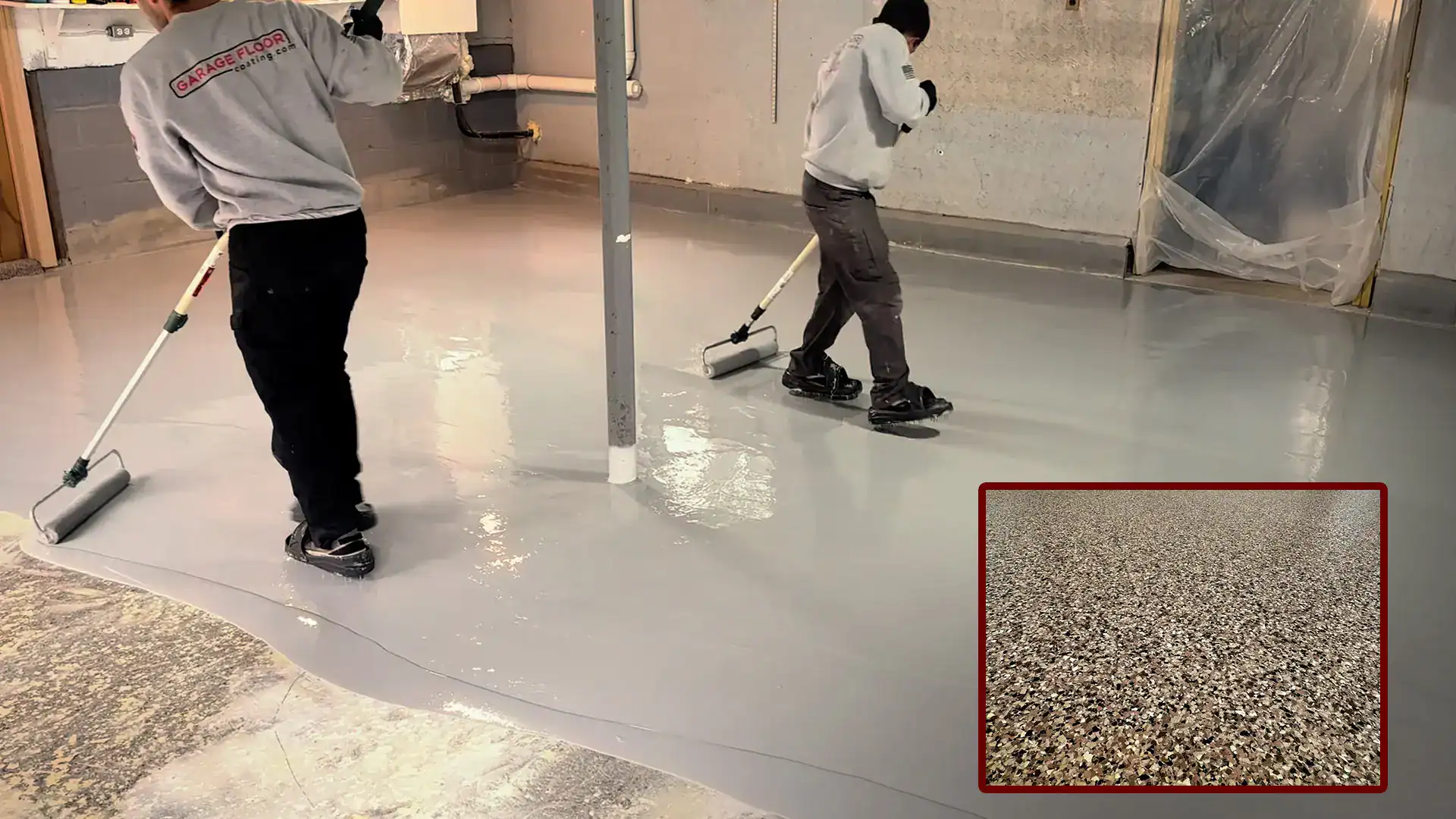
Once the concrete is properly prepared and primed with the moisture-mitigating epoxy, and the flakes broadcast into the “wet” primer coat, the system is read for the clear polyaspartic top coats. The dual polyurea-polyaspartic top coatings cure quickly and deliver excellent resistance to UV exposure, chemicals, oils, abrasions, and hot tire transfer.
These properties make hybrid epoxy and polyaspartic flooring ideal for garages, driveways, and industrial spaces where floors are exposed to heavy use and sunlight. However, polyaspartic floor coatings are not recommended for direct-to-concrete application (they go down thinly and cure so quickly that they fail to properly penetrate the concrete slab). Without a proper moisture-mitigating epoxy base, adhesion and longevity are compromised.
When used as a color coat or clear topcoat over epoxy, polyaspartic coatings lock in durability while maintaining the appearance of the entire coating system over time.
Why Professional Installers Use Both Materials
No single coating excels at bonding to concrete, managing moisture, and resisting surface wear equally well. That is why professional garage floor coating systems are built in layers.
The moisture-mitigating epoxy primer coat handles adhesion and moisture mitigation. The polyurea-polyaspartic top coatings handle UV protection and surface durability. Used together, they create a balanced system designed to perform under real-world conditions.
This layered approach also explains why polyurea-polyaspartic 1-day coating systems are often problematic. Skipping or rushing critical steps beneath the surface may save time, but it significantly increases the risk of failure. Proper systems allow adequate curing time for the epoxy base before polyaspartic layers are applied.
Build a Garage Floor Coating That Looks Great and Lasts
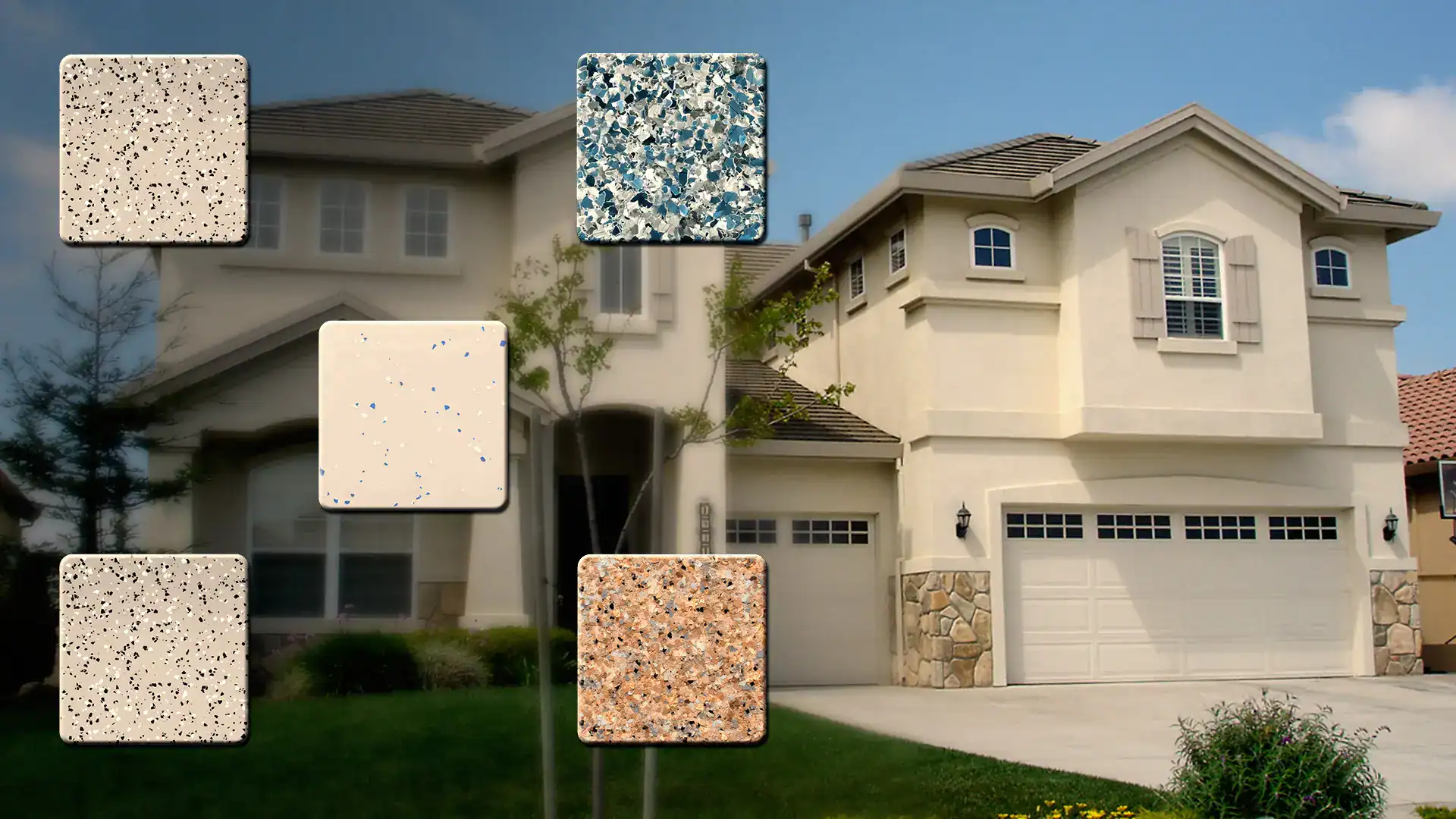
Choosing a garage floor coating is not just about performance. It is also about design. GarageFloorCoating.com offers a Live Coatings Visualizer, allowing you to preview colors and flake blends in your actual garage or home. This tool helps homeowners see how different polyaspartic flooring options will look once the full system is installed.
If you are considering polyaspartic flooring, the most important decision is not the product name on the label. It is how the system is designed and installed. A professional approach that uses a hybrid moisture-mitigating epoxy and polyurea-polyaspartic coatings together is what delivers long-term durability, performance, and confidence.
Contact us to learn more, explore design options, and schedule a consultation for a garage floor coating system built to last.
About the Author

Share this Post