

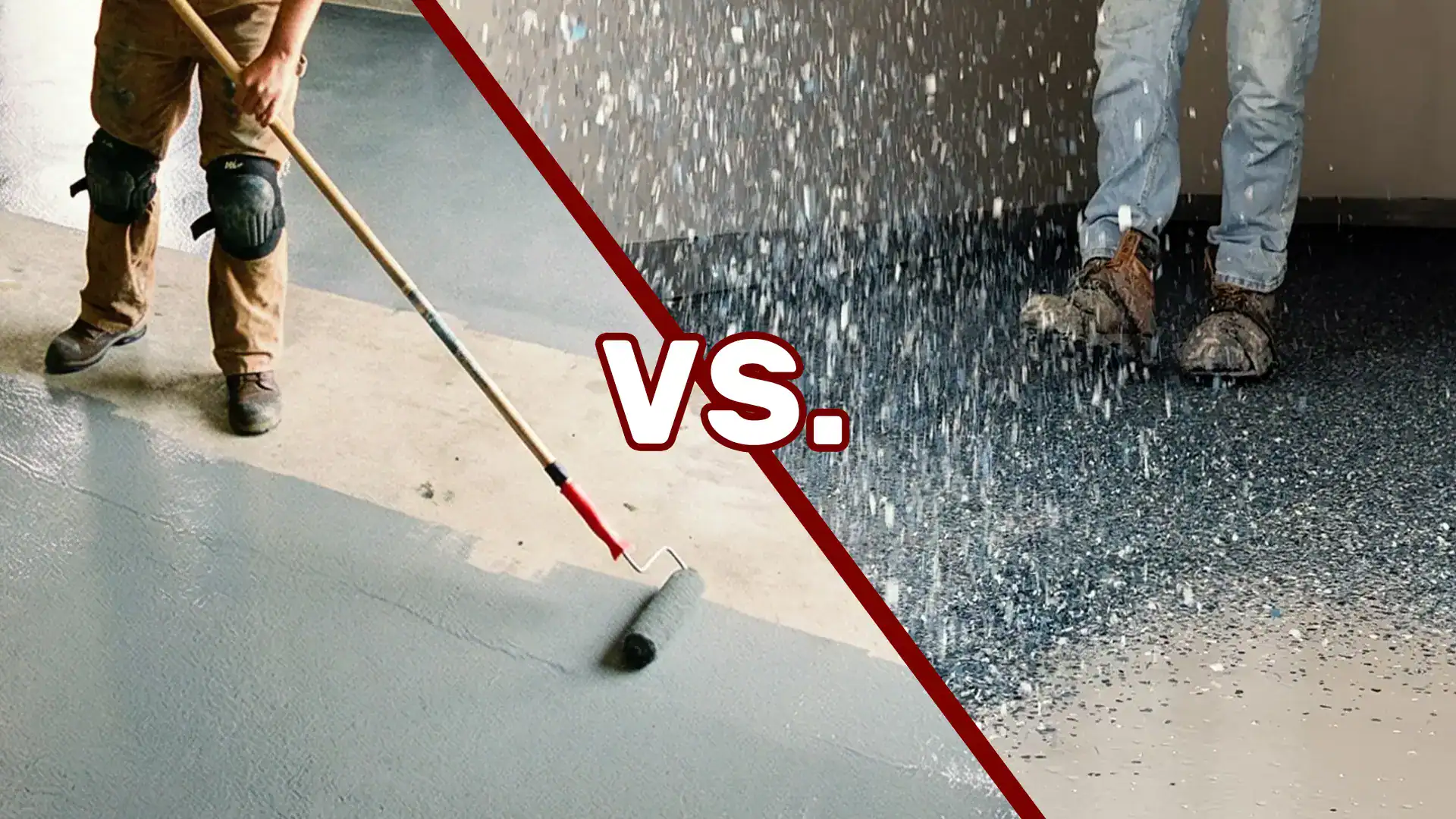
Not sure whether concrete paint or an epoxy floor coating makes sense for your garage floor? You’re not alone. Both options promise to improve the look of bare concrete, and at first glance, they can seem interchangeable. The right choice depends less on appearance and more on how you actually use your garage.
Understanding what each product is designed to do is the easiest way to make a confident, long-term decision.
If You Want a Quick Cosmetic Refresh
Concrete paint is designed for one primary purpose: cosmetic improvement. It adds color, brightens a dull surface, and gives concrete a cleaner appearance at a relatively low upfront cost. For homeowners looking to refresh a low-traffic space or improve appearance temporarily, concrete paint can be a reasonable option.
That said, concrete paint is exactly what it sounds like: paint. It forms a thin, surface-level coating that sits on top of the slab. It does not bond deeply with the concrete, reinforce the surface, or address moisture vapor moving up through the slab.
Because of that, paint works best in spaces where durability is not a priority. In garages, where floors are exposed to vehicles, temperature changes, spills, and daily wear, painted surfaces tend to chip, peel, fade, and require frequent touch-ups. Paint is not a failure as a product. It is simply limited by what it was designed to do.
If You Park, Store, or Work in Your Garage
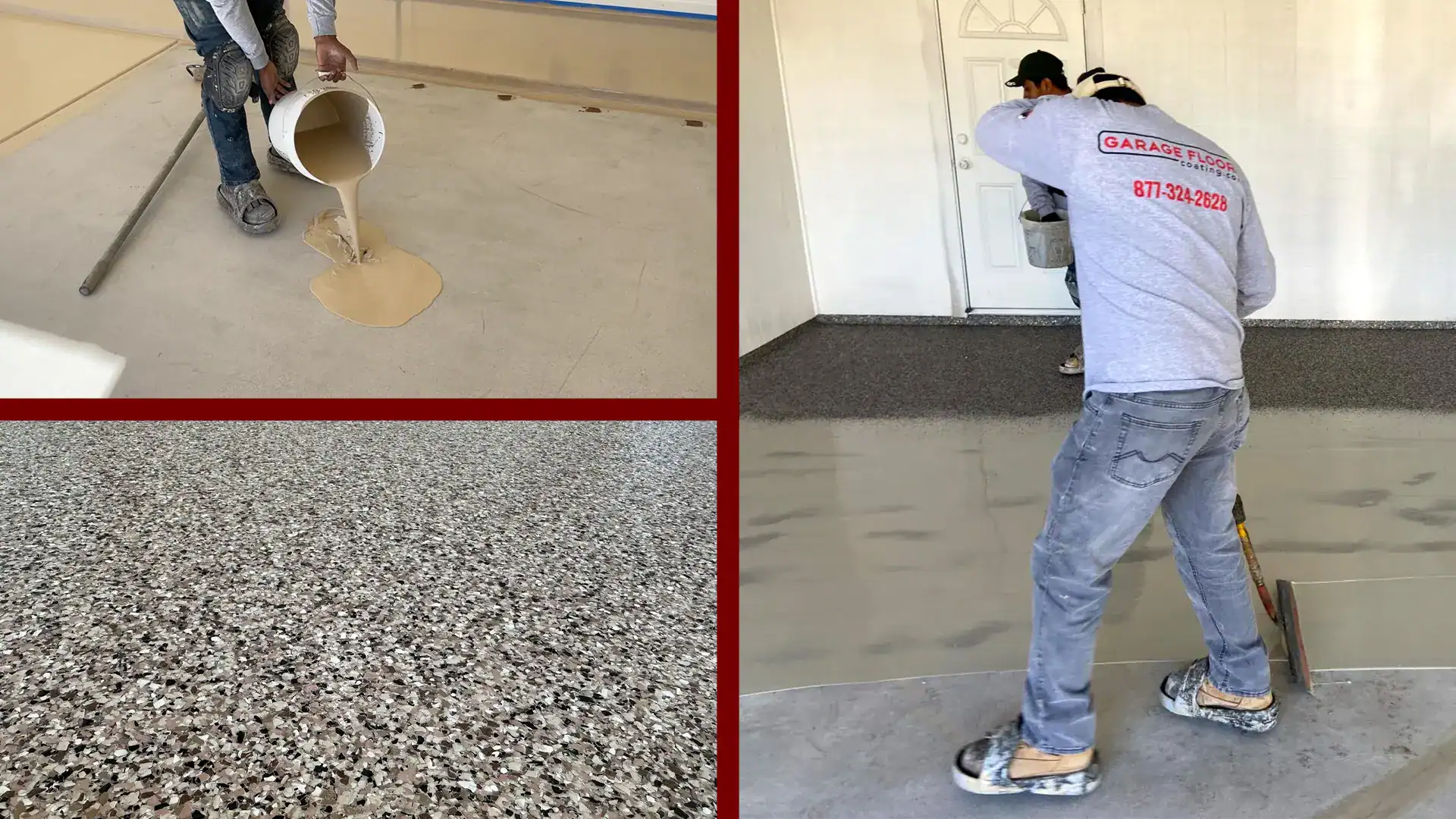
If your garage sees real use, an epoxy garage floor coating is built for a very different job. Rather than acting as a surface color treatment, epoxy is designed to protect the concrete itself and perform under demanding conditions.
A professionally installed garage floor coating system bonds directly to the slab and becomes part of the floor, rather than sitting on top of it. In a proper 2-day installation, the concrete is mechanically prepared before a moisture-mitigating epoxy primer is applied. This base layer helps manage vapor transmission beneath the surface and creates a strong foundation.
From there, a decorative flake blend is broadcast into the base coat for texture, strength, and visual depth. The system is finished with dual UV-stable, 100%-solids polyaspartic topcoats that resist abrasions, chemicals, hot tire pickup, and staining. The result is a seamless, durable surface designed for everyday garage life.
Why Epoxy Flooring Outshines Concrete Paint
When comparing epoxy flooring to concrete paint, the difference becomes clear:
- Durability: Epoxy withstands heavy traffic, spills, and abrasions, while paint chips and fades under stress.
- Longevity: Epoxy floor coatings can last a decade or more when installed correctly, compared to the short lifespan of painted surfaces.
- Aesthetic Options: Epoxy offers a wide range of customizable finishes, from subtle and understated to bold and eye-catching. Concrete paint is far more limited in appearance.
- Maintenance: Epoxy is easy to clean and maintain, while painted floors often require frequent touch-ups.
- Safety: A moisture-mitigating epoxy floor coating helps reduce moisture-related issues and serves as an effective line of defense against radon infiltration. Concrete paint remains purely topical and offers no comparable protection.
Choosing the Right Garage Floor Solution
Concrete paint can make sense if your goal is a short-term visual refresh. But for homeowners who want lasting protection, easier maintenance, and a garage floor built to handle real use, an epoxy floor coating is the clear upgrade.
If you are exploring styles and finishes, start with the Live Coatings Visualizer to see how different coating options can look in your space. When you are ready, reach out to schedule a consultation and take the next step toward a garage floor that does more than just look good.
About the Author

Share this Post