

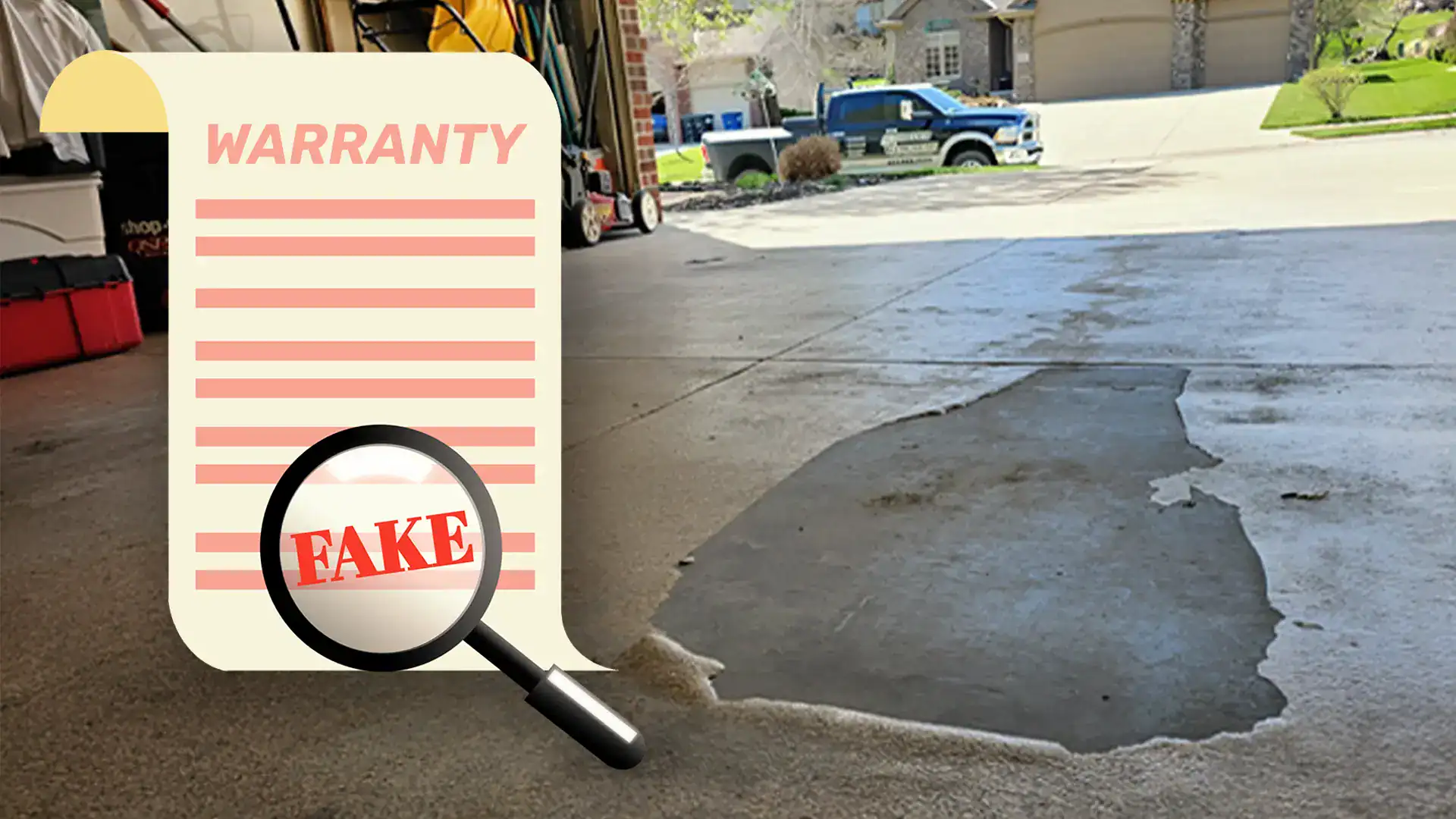
A garage floor coating is often sold with bold warranty promises. Fifteen years. Twenty years. Limited lifetime coverage. But across the industry, many of those warranties are written in a way that protects the installer, not the homeowner.
The fine print matters. Before choosing any installer, these five questions can quickly reveal whether a warranty is built on real protection or engineered loopholes.
1. Does Your Coating Warranty Cover All Moisture-Related Issues, Yes or No?
This is the most important question in the entire garage floor coating process. Many companies advertise long warranties but quietly exclude moisture-related failures. They rely on arbitrary thresholds like 3 lbs MVER, 6 lbs MVER, or specific Tramex readings as escape clauses.
Moisture vapor transmission through concrete is constant. When a warranty includes moisture exclusions, it often becomes void the moment a failure occurs. A warranty that does not fully cover moisture is not real protection.
2. Do You Use a Moisture-Mitigating Primer on Every Installation?
If the answer is anything other than yes, that is a red flag. Many contractors only “discover” moisture after diamond grinding begins, then pressure homeowners into unexpected moisture-mitigation fees. These surprise charges can add hundreds or thousands of dollars to the project.
The truth is simple. Moisture in concrete is not unexpected. It is inevitable. GarageFloorCoating.com includes a proprietary moisture-mitigating epoxy primer on every installation, without surprise fees and without using moisture as a future warranty loophole.
3. Is Plasticizer Migration (Permanent Tire Staining) Included In the Warranty?
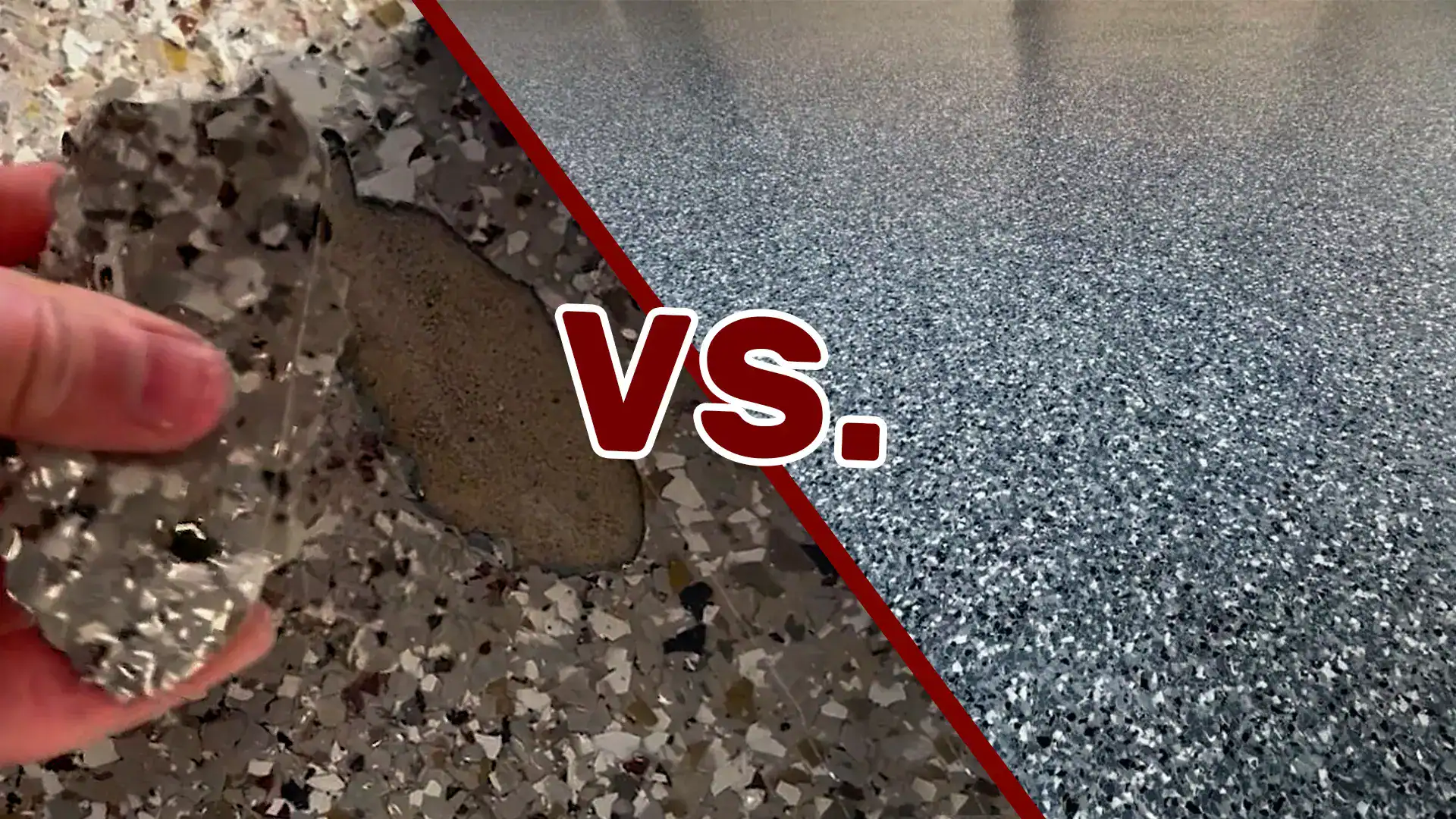
Permanent tire staining, also known as plasticizer migration, is one of the most common garage floor coating issues. Heat causes tire compounds to leach into coatings, permanently discoloring the surface. Many thin epoxies, lower-grade polyaspartics, polyureas, and 1-day systems cannot resist this damage.
Instead of engineering better systems, competitors quietly exclude tire staining from their warranties. We use multi-layer systems designed to resist plasticizer migration and back them with warranties that do not hide behind appearance-based exclusions.
4. Does the Warranty Include Materials and Labor?
If labor or materials are excluded, the homeowner often pays most of the repair cost, even when the failure is not their fault.
A real concrete coating warranty should clearly state that both materials and labor are covered. If either is excluded, the risk has been shifted back onto the homeowner.
5. Can You Provide Technical Data Sheets for Every Product Being Installed?
If an installer hesitates or cannot provide Technical Data Sheets, the products may be thin, untested, or not suitable for long-term performance. Transparency matters. Technical data reveals thickness, solids content, cure times, and performance limitations.
A warranty backed by real engineering should never be backed by mystery materials.
What a Real Garage Floor Coating Warranty Should Include
Before signing any contract, homeowners should verify that the warranty:
- covers all moisture-related issues
- includes moisture mitigation on every job
- does not exclude tire staining
- covers both materials and labor
- is backed by Technical Data Sheets for every product used
If any part of that list is missing, the warranty likely favors the installer, not the homeowner.
GarageFloorCoating.com builds systems engineered for real-world conditions and backs them with a true lifetime warranty that does not rely on loopholes. If you are comparing garage floor coating options, start with the questions that actually matter.
About the Author

Share this Post