

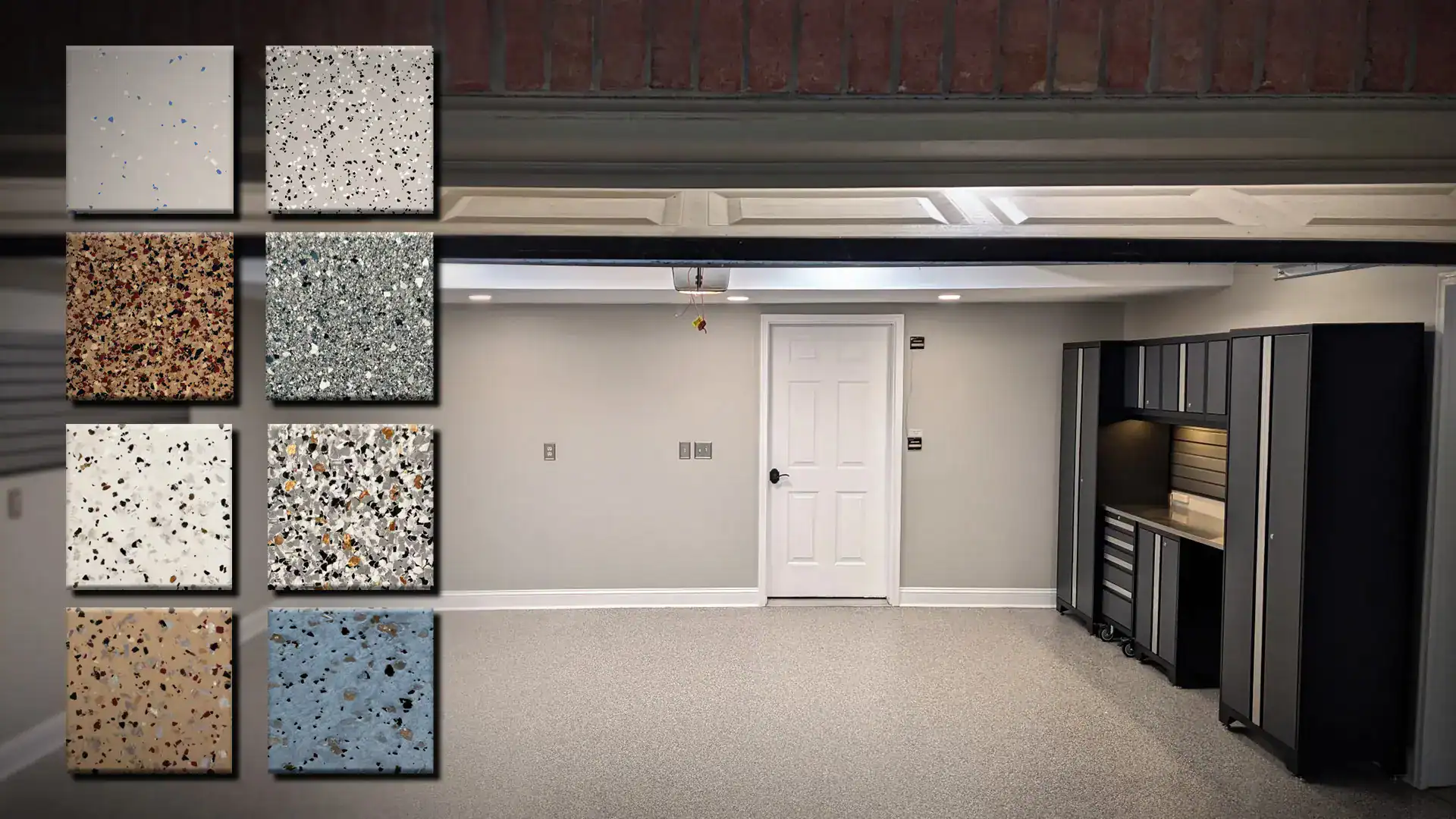
Upgrading your garage floor seems simple at first. A quick trip to the hardware store, a few gallons of garage floor paint, and a free weekend can make the project feel manageable. But many homeowners discover too late that not all floor coatings are designed to last.
Peeling, staining, fading, and hot tire pickup are common problems when the wrong products or installation methods are used. In many cases, the issue is not the concrete itself. It’s the coating system chosen from the beginning.
If you’re comparing garage floor paint options for your home, avoiding these common mistakes can help you choose a floor that performs well for years instead of months.
Mistake #1: Assuming Garage Floor Paint and Epoxy Are the Same
One of the biggest misconceptions homeowners have is believing all concrete coatings work the same way. Many DIY garage floor paint products are acrylic or latex-based coatings designed primarily for cosmetic improvement. While they can temporarily change the appearance of the floor, they often lack the durability needed for long-term performance.
True epoxy flooring systems are built differently. Industrial-grade epoxy penetrates and bonds with the concrete surface, creating a stronger foundation that can withstand vehicle traffic, chemicals, abrasions, and daily wear.
That’s why epoxy flooring is commonly used in spaces where basic concrete paint would struggle to keep up. In addition to garages, epoxy systems are frequently installed in basements for waterproofing because they create a moisture-resistant barrier that helps prevent mold and mildew. They are also used in outdoor spaces like patios and driveways, as well as commercial and industrial environments such as warehouses, retail stores, manufacturing facilities, and even fire stations.
Mistake #2: Ignoring Moisture Mitigation
Concrete naturally contains moisture, even when it appears dry on the surface. If coatings are applied without proper moisture mitigation, vapor can build beneath the coating and eventually cause bubbling, peeling, or delamination.
This is one reason many inexpensive coating systems fail prematurely. Moisture problems are often invisible until the damage begins.
A high-quality garage floor coating system addresses this issue from the start with proper surface preparation and moisture-mitigating primer layers.
Mistake #3: Choosing a 1-Day Installation
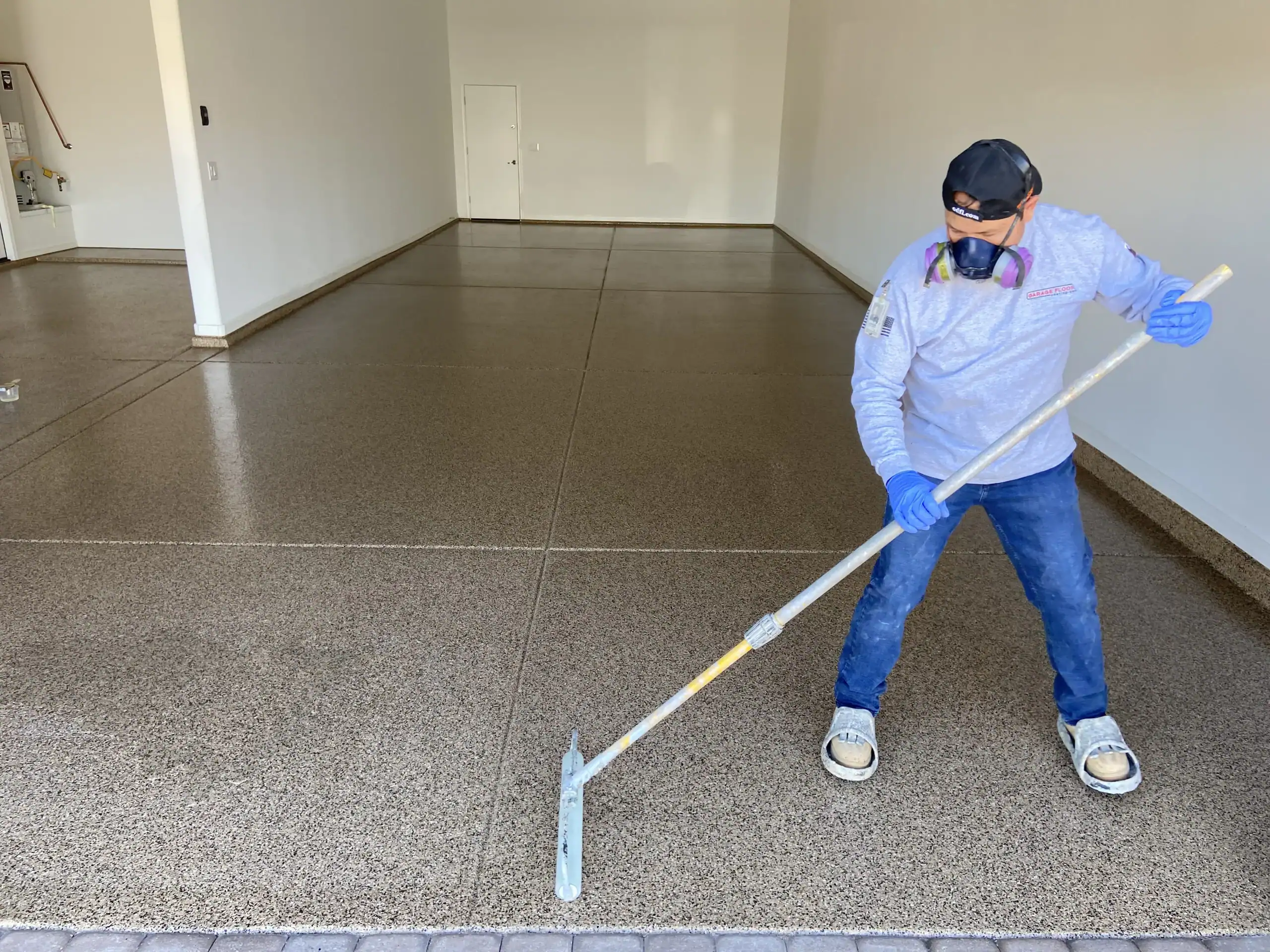
Fast installations may sound convenient, but speed can come at the expense of long-term durability. Many 1-day systems fail to apply a true moisture-mitigation coating, compromising adhesion over time.
A properly installed 2-day system allows each layer to cure correctly while creating a stronger overall bond with the concrete underneath.
Mistake #4: Overlooking Surface Preparation
Even the best coating materials can fail if the concrete is not prepared correctly first. Simply pressure washing or acid etching the floor is often not enough.
Professional systems typically rely on diamond grinding to properly open the concrete surface and create the profile needed for long-term adhesion.
Mistake #5: Focusing Only on Upfront Cost
Cheap garage floor paint can become expensive when touch-ups or full replacement are needed a few years later. A professional epoxy and polyaspartic system offers greater durability, easier maintenance, and better long-term value.
If you want a garage floor designed to last, GarageFloorCoating.com offers premium 2-day coatings built for long-term durability. Contact our team today to learn more about looring backed by industrial-grade materials and proven installation methods.
Frequently Asked Questions
Q: Is concrete paint the same as a garage floor coating?
A: Concrete paint is a thin, decorative, acrylic-latex layer prone to peeling, while garage floor coatings (like epoxy and polyaspartic) are thick, durable systems that chemically bond to the concrete.
Q: How long should a garage floor coating last?
A: Professionally installed systems can last decades, while thin coatings may fail within a few years.
About the Author

Share this Post