

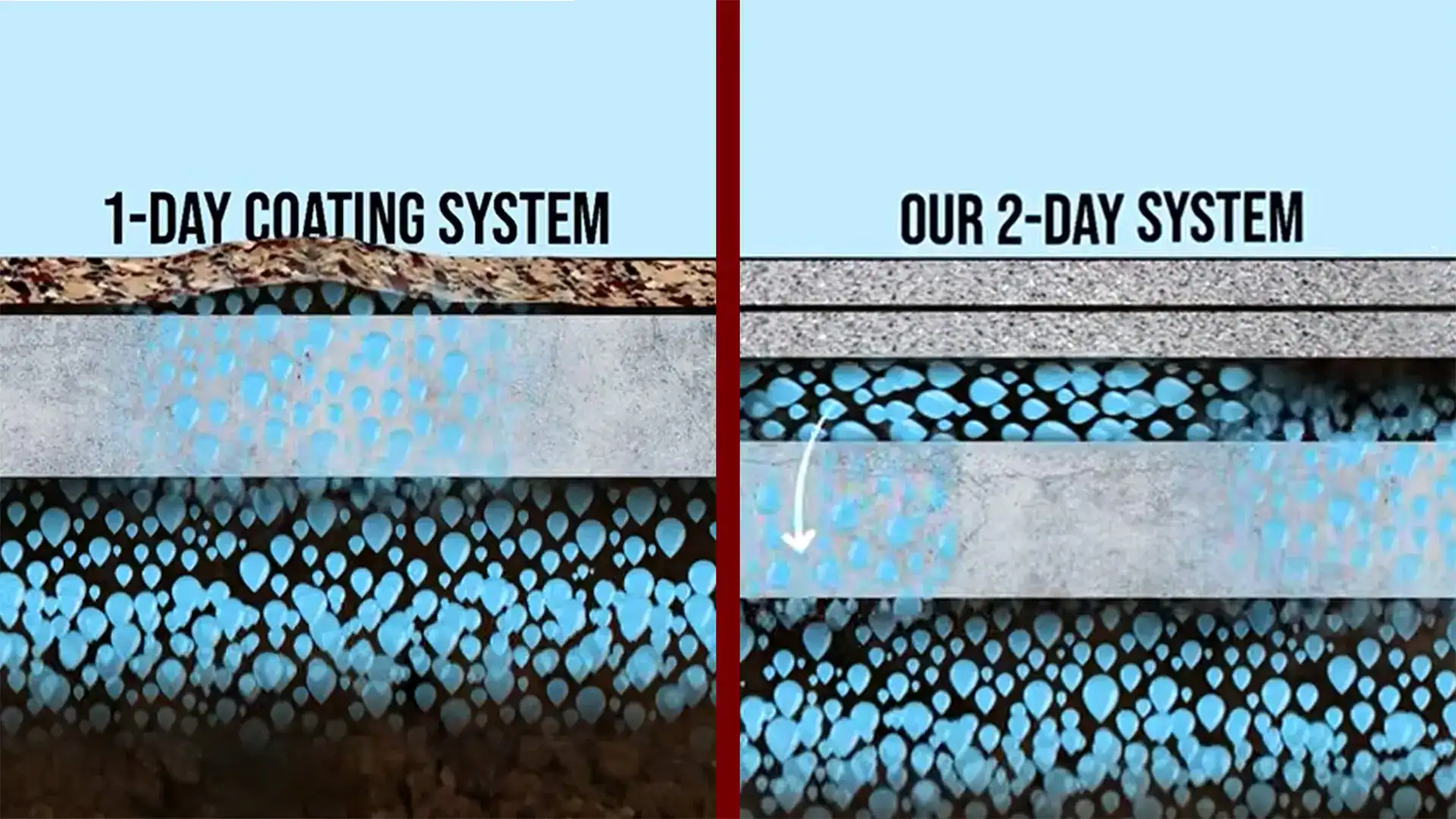
A garage floor coating should be built to last decades, not just look good for a few months. Yet one of the most common reasons coatings fail has nothing to do with traffic, chemicals, or wear. It comes from below the surface. Moisture vapor transmission is the leading cause of failure in any garage floor epoxy system that isn’t properly designed to handle it.
Frequently Asked Questions
Q: What causes garage floor coatings to fail?
A: Moisture vapor transmission through concrete is the leading cause.
Q: Do all warranties cover moisture?
A: No, most exclude it, which is a major red flag.
What Moisture Vapor Transmission Really Means
Concrete may seem solid. However, it’s actually porous. Hence, it continuously absorbs moisture from the surrounding soil and then releases it as vapor. That vapor moves upward through the slab, even in dry climates, creating pressure beneath anything applied to the surface.
As a result, when a coating is installed without proper moisture mitigation, that vapor has nowhere to go. Over time, it pushes up against the coating from below. This pressure weakens the bond between the coating and the concrete, eventually causing failure.
This is why moisture vapor transmission is not a rare issue. It is a constant, ongoing process that every garage floor epoxy system must account for.
What Happens When a Coating Doesn’t Address Moisture
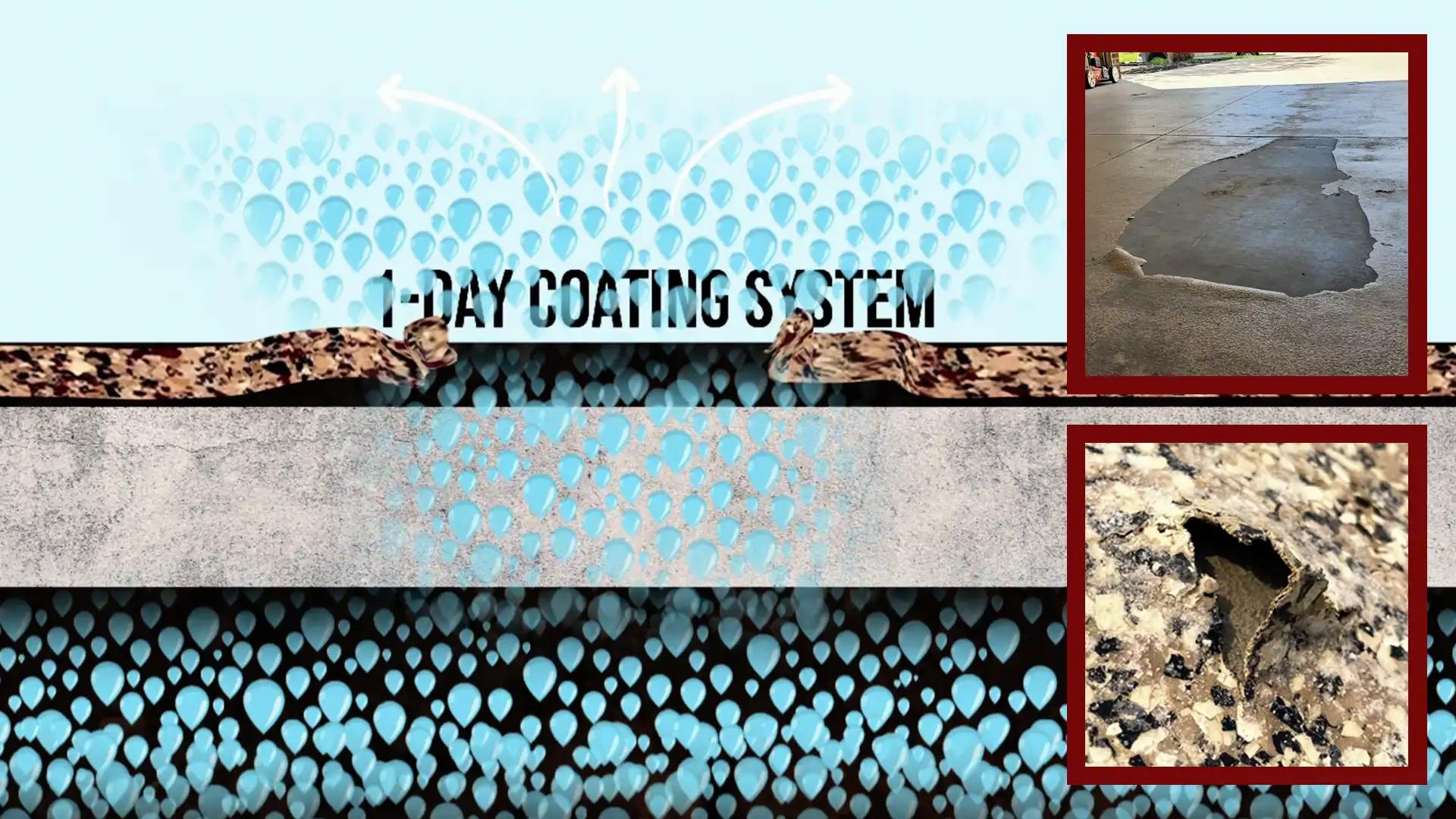
When moisture vapor is ignored, failure is only a matter of time. The warning signs usually follow a predictable pattern:
- Bubbling or blistering as vapor pressure builds
- Peeling or delamination as the coating loses adhesion
- Discoloration or staining trapped beneath the surface
- Cracking and gradual breakdown of the coating
These problems are symptoms of a system that was never designed to handle what is happening underneath.
Many 1-day systems fail because they do not apply a true moisture-mitigation layer. Without that critical layer, even a visually appealing garage floor coating can begin to fail much sooner than expected.
What a Proper Garage Concrete System Includes
Not all systems are created equal. A high-performance garage floor epoxy system designed for long-term durability includes several key components:
- A moisture-mitigating epoxy primer that penetrates the concrete and helps control vapor transmission
- A 2-day installation process that allows the system to properly cure and bond
- A full-broadcast flake layer that adds durability and consistent coverage
- Two 100%-solids polyaspartic topcoats that provide protection against wear, chemicals, and UV exposure
- A warranty that includes moisture-related failure, not excludes it
Each layer plays a role, but it starts with stopping moisture at the source.
How a 2-Day Garage Floor Epoxy System Solves the Problem
A professional 2-day garage floor epoxy system is built specifically to address moisture vapor transmission. The process begins with a moisture-mitigating epoxy primer that bonds deep into the concrete and helps block vapor before it can compromise the coating.
From there, the system is built up with a full-broadcast flake layer and sealed with dual polyaspartic topcoats. This creates a dense, durable surface that maintains adhesion while standing up to heavy use, chemicals, and environmental exposure.
When installed correctly, this type of system can last 30 years or more and is backed by a lifetime warranty against delamination.
Invest in Garage Floor Epoxy That’s Built from the Ground Up
If you want a garage floor that truly lasts, you have to start below the surface. Moisture vapor transmission is the biggest threat to any coating, and ignoring it leads to early failure.
GarageFloorCoating.com installs garage floor epoxy systems designed with moisture mitigation at the core. Schedule your free estimate today and get a floor built to perform for the long haul.
About the Author

Share this Post