

If you’ve started researching garage flooring, you’ve probably noticed how quickly the terminology becomes a barrier rather than a help. Some installers use technical terms to communicate clearly and transparently. Others use them to blur the lines between professional coatings and fast, cosmetic solutions that won’t last. The more familiar you are with this vocabulary, the easier it becomes to make confident decisions—and avoid paying for a system that fails long before it should.
Below is a clear, homeowner-friendly glossary of the most important garage flooring terms. Once you understand what each one really means, you’ll be able to assess installers, identify red flags, and choose a coating system built for true long-term performance.
Epoxy Coatings
Epoxy is the backbone of a professional installation. It’s a two-part material that, once mixed, chemically cures into a dense and highly adhesive layer. Epoxy is used for the primer and broadcast coats because it bonds deeply into concrete and creates the structural strength a floor needs to stand up to hot tires, impacts, daily use, and climate-related stress. If an installer avoids talking about epoxy—or worse, claims they “don’t need it”—that’s a sign they may be using a shortcut system rather than a properly engineered solution.
Moisture Mitigation
Concrete constantly emits moisture vapor. When installers don’t address it, coatings can bubble, peel, or fully delaminate within months. Moisture mitigation refers to the use of a moisture-mitigating epoxy primer that forms a vapor barrier. This step protects the entire system from underneath, and it’s one of the biggest differences between a durable 2-day installation and a rushed 1-day cure-and-go approach. If a company can’t explain how they mitigate moisture, keep shopping.
Concrete Paint
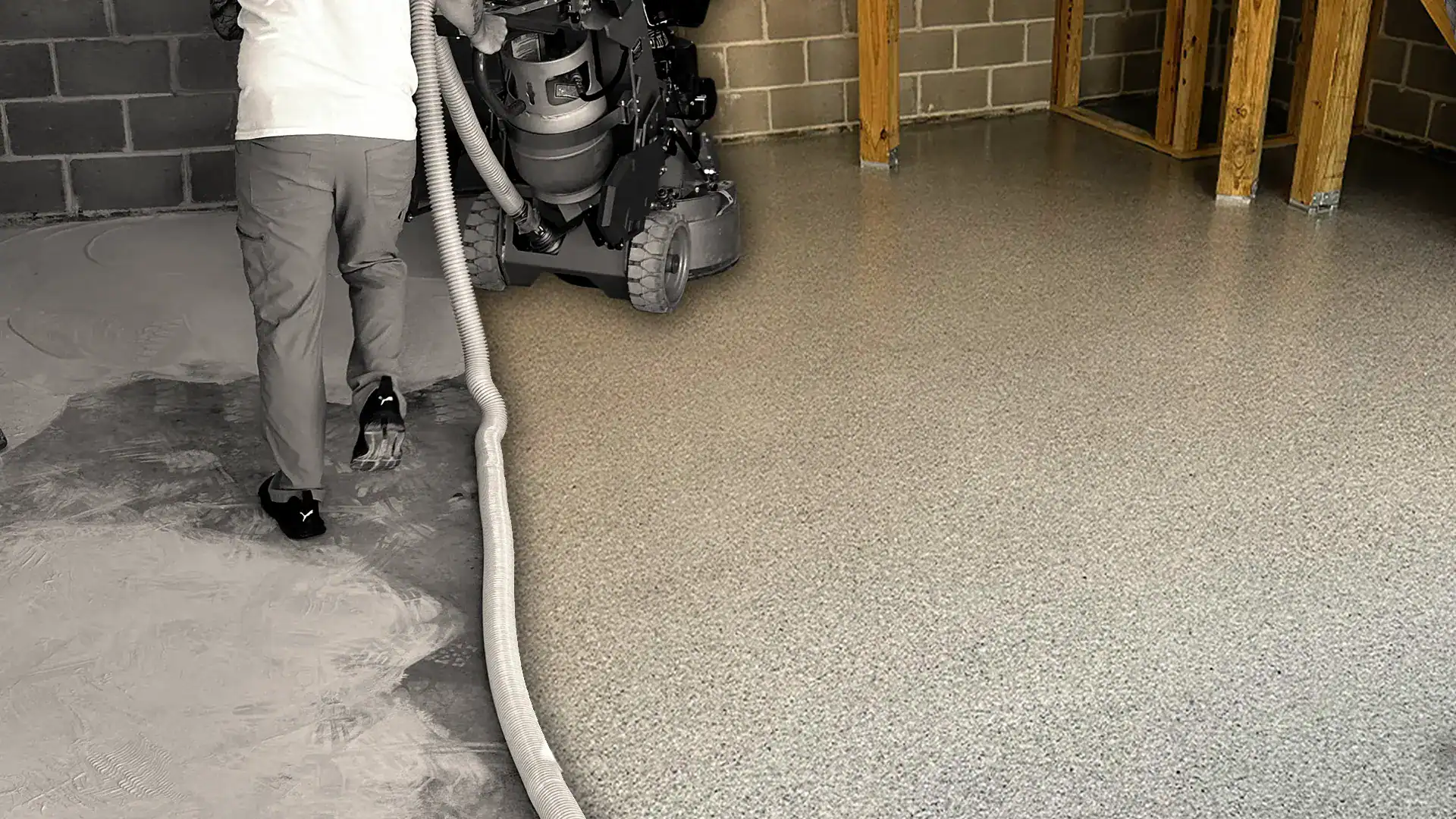
Paint is often marketed as a “coating,” but the two are not the same. Concrete paint is a thin, cosmetic product designed only to color the surface. It does not chemically bond with concrete and cannot handle hot tires, abrasion, road salt, or seasonal temperature swings. If longevity is your goal, paint should never be part of your garage flooring plan.
Polyaspartic
Professional installers rely on polyaspartic as the protective topcoat in a multi-layer system. Polyaspartic cures quickly, resists chemicals and abrasion, and stays clear even under intense UV exposure. But despite what some companies advertise, polyaspartic is not meant to replace epoxy or moisture mitigation. It performs best as the topcoat—not the entire system.
Polyurethane
Polyurethane is another clear-coat material used in some flooring systems. While durable, polyurethane generally offers lower UV and chemical resistance compared to polyaspartic. For most residential garages, especially those exposed to sunlight, polyaspartic remains the superior final layer.
Flake/Full-Flake
In a flake epoxy system, colored polyvinyl acetate (PVA thermoplastic) and/or mica mineral flakes are broadcast into the wet epoxy to create visual depth, slip resistance, and texture. A full-flake installation covers the entire surface, forming a thicker, more uniform finish that outperforms partial coverage in both durability and appearance.
Garage Floor Coating
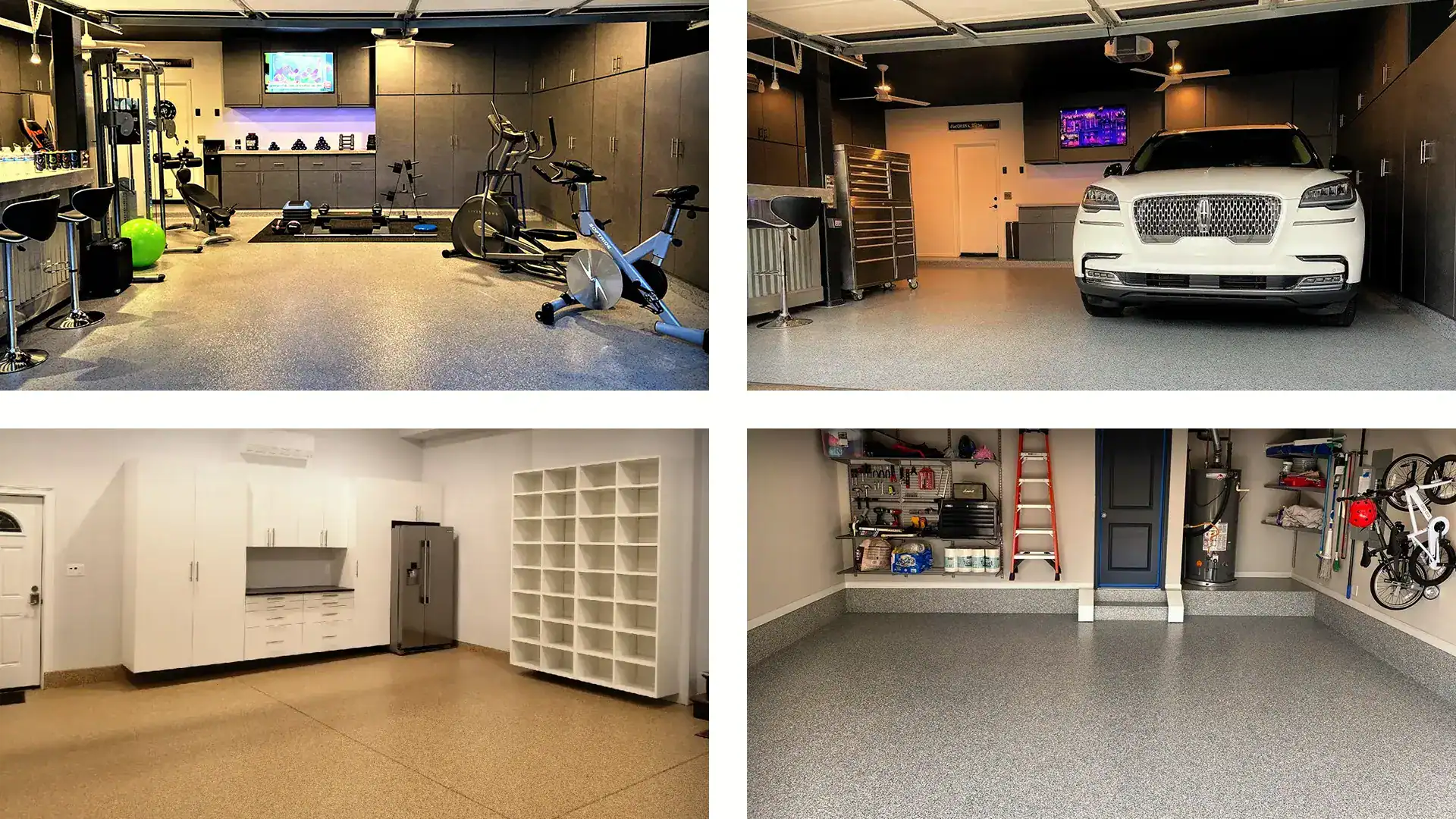
A true garage floor coating is a complete, multi-layer system: moisture-mitigating epoxy primer, full-flake coverage, and multiple polyaspartic topcoats. When any of these layers are missing, you’re not getting the performance or longevity you’re paying for, no matter how compelling the sales pitch.
Understanding these terms empowers you to choose wisely. And when you’re ready for a coating system engineered to last, GarageFloorCoating.com delivers industry-leading technology, expert installation, and unmatched durability. Request your free quote today.
About the Author

Share this Post