

Q. How long does garage floor epoxy last?
A: A professionally installed garage floor epoxy coating system can last 15–20 years or longer when the concrete is properly prepared and moisture issues are addressed.
Q. Can garage floor epoxy be installed over cracked concrete?
A: Yes. Most cracks can be professionally repaired prior to installation using specialized crack repair materials and techniques. In cases involving larger or moving cracks, crack stitching systems may also be recommended to help reinforce the concrete and reduce the risk of future movement telegraphing through the garage floor epoxy coating system.
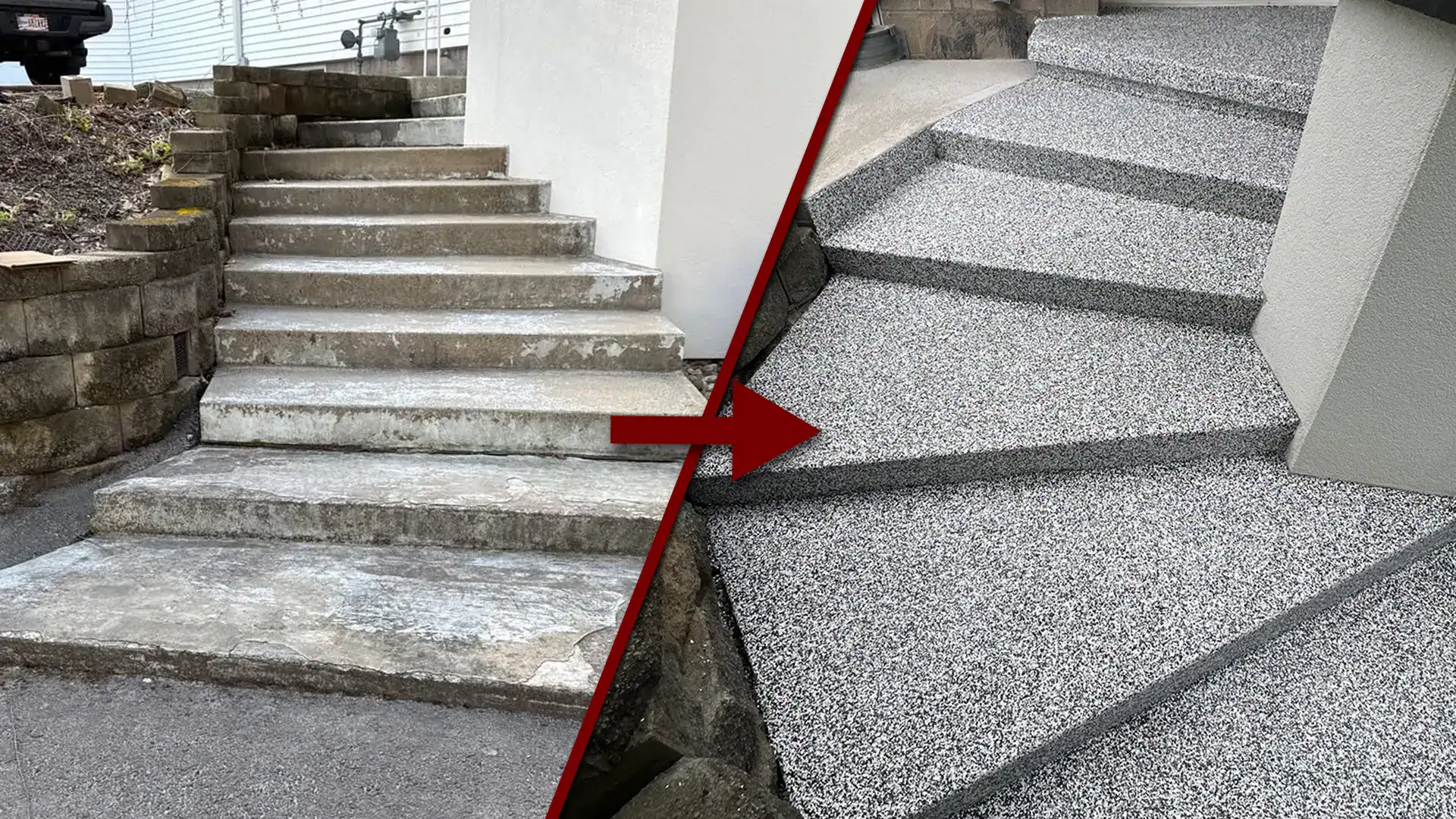
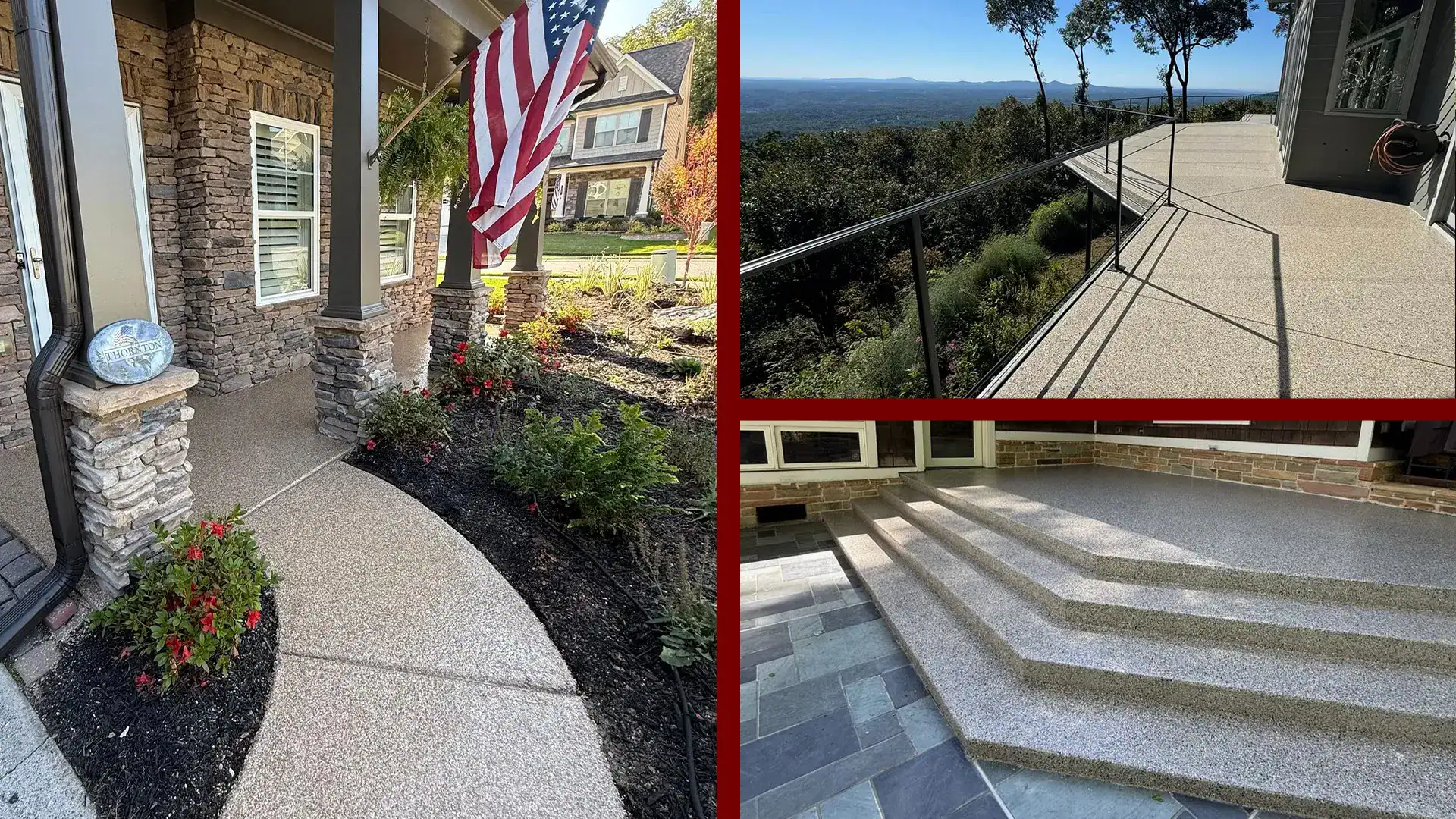
Can garage floor epoxy be installed outdoors? The answer is yes and no.
While many people use the phrase “garage floor epoxy” to describe all concrete coatings, not every epoxy flooring product is designed for exterior exposure. Patios, porches, pool decks, walkways, and driveway extensions are constantly exposed to sunlight, rain, temperature swings, freeze-thaw cycles, and moisture vapor transmission from beneath the slab. A coating that performs well indoors may fail surprisingly quickly outside if the wrong products or installation methods are used.
That’s why long-lasting outdoor floor coating installations rely on more than epoxy alone.
Why Standard Epoxy Flooring Often Fails Outdoors
Epoxy remains an extremely important part of a quality coating installation, particularly as a moisture-mitigating primer. However, standard epoxy should not be used as the final exposed topcoat outdoors because prolonged UV exposure can eventually cause fading, ambering, or discoloration.
This is where many lower-quality outdoor coatings run into trouble.
Exterior concrete requires a layered installation approach designed specifically for weather exposure and long-term durability. A properly engineered outdoor floor epoxy installation typically includes:
- Mechanical concrete preparation
- A 100% solids moisture-mitigating epoxy primer
- A full broadcast decorative flake layer
- UV-stable polyaspartic topcoats
Each layer serves a specific purpose. The moisture-mitigating epoxy primer penetrates into the concrete substrate and helps reduce the risk of peeling or delamination caused by moisture vapor pressure beneath the slab. The decorative flake layer adds slip resistance, durability, and visual appeal, while the polyaspartic topcoats help protect against UV exposure, stains, and impact.
On driveway extensions or other areas where vehicles are parked, polyaspartic topcoats also help resist plasticizer migration, the tire-related chemical reaction that can permanently stain lower-quality coatings.
Moisture Mitigation Matters More Outdoors
Many homeowners think weather exposure is the primary threat to outdoor concrete coatings. In reality, one of the biggest dangers often comes from below the slab.
Concrete is porous, meaning it continuously absorbs moisture from surrounding soil and releases it upward as vapor over time. Outdoor slabs often experience even greater moisture vapor transmission because of rain, humidity, snow, and changing temperatures.
Without proper moisture mitigation, that vapor pressure can eventually weaken the coating bond and lead to peeling, bubbling, or delamination.
That’s one reason quality outdoor floor coating installations require proper preparation, layered installation methods, and adequate curing time.
Explore Your Outdoor Coating Options
GarageFloorCoating.com installs garage floor epoxy and epoxy flooring solutions designed for both interior and exterior concrete surfaces. Whether you’re upgrading a patio, finishing a garage, or exploring metallic flooring for an indoor space, our team can help you choose a coating built for long-term performance.
Ready to start exploring styles and colors? Try the Live Coatings Visualizer to preview decorative flake blends and coating options on your space, then contact our team for a free estimate.
About the Author

Share this Post